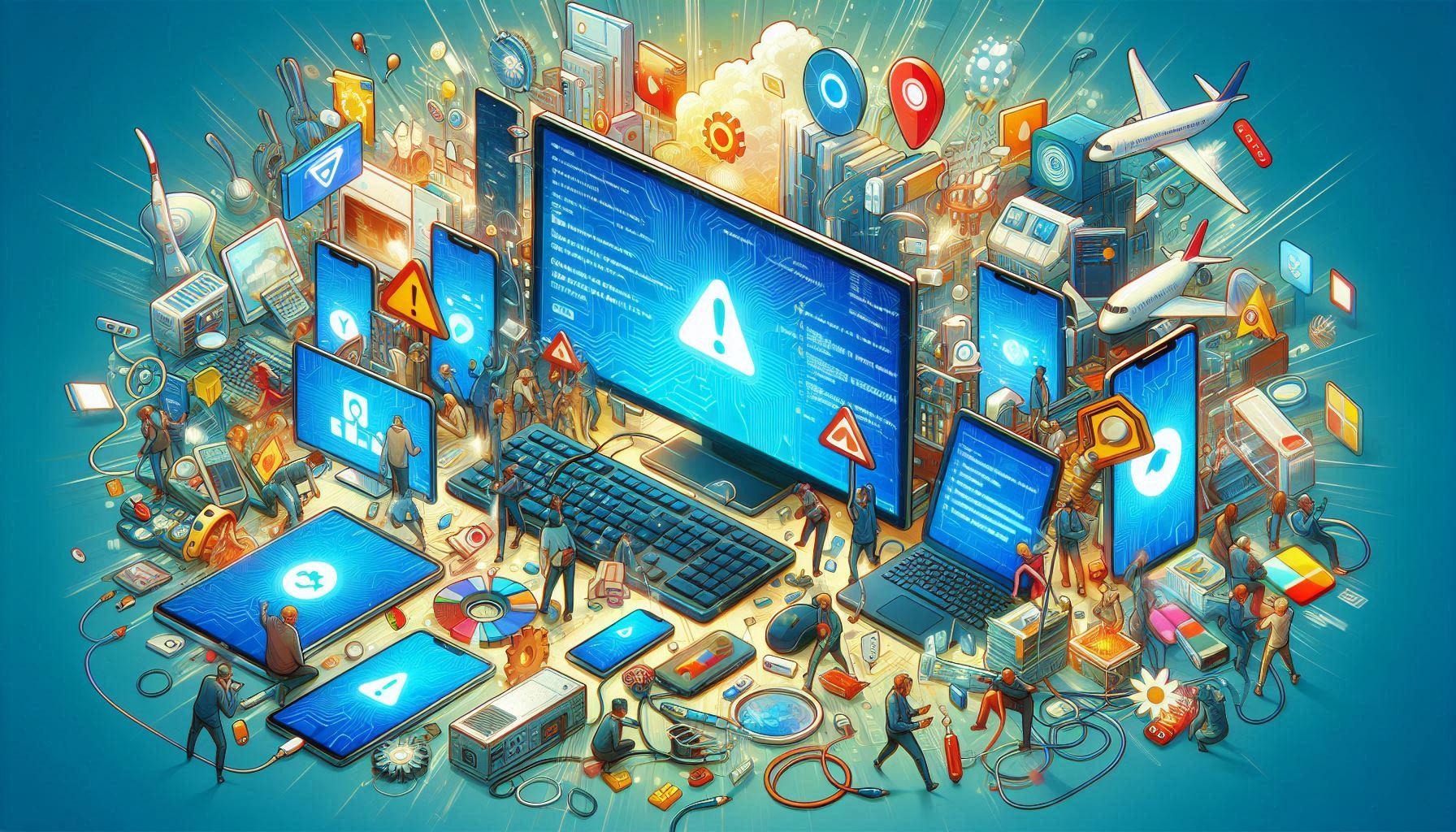
Have you ever wondered what would happen if suddenly all computers went out, phones stopped working, and the Internet disappeared as if by magic? Sounds like a scenario from a sci-fi movie, doesn’t it? But it’s not that far from reality at all. In today’s world, IT is more than just computers and applications – it is literally the critical infrastructure on which almost everything around us relies.
Let’s start with the basics. Critical infrastructure are those elements without which the entire country could stand on its head. We’re talking about sectors that need to run like clockwork, or else things could be fragile. Energy, transportation, finance, health care – to name just a few. In all of this, IT acts as the glue that holds these sectors together, enabling communication, data management and day-to-day operations. Without IT, many of these systems would simply cease to function.
Connecting the dots: Imagine that IT is the network that binds all other sectors together. Without it, communication and data exchange between them would be like wandering through a maze without a map. Energy management systems, banks and even hospitals rely on advanced technology to operate efficiently and without interruption.
An indispensable part of the economy: IT is what allows us to shop online, work remotely and even watch movies on Netflix. If something were to go wrong – such as a server crash or cyberattack – the consequences could be catastrophic, from data loss to gigantic financial losses.
Cyber threats and their consequences: While IT is our best friend, cybercriminals are far less welcome guests. Hacking attacks, data theft, malware – these are just some of the problems we have to face. Protecting IT is like building a fortress that must withstand even the toughest siege.
A great example of how serious the consequences can be related to IT as critical infrastructure is the recent incident involving CrowdStrike. In July 2024, CrowdStrike released a “Rapid Response Content” update for its Falcon software. Unfortunately, the update contained bugs that caused serious problems on millions of Windows devices around the world. A bug in the update led to a “Blue Screen of Death” (BSoD), which resulted in systems stopping immediately and unable to restart without technical intervention.
An estimated 8.5 million devices globally were affected by the incident, causing significant disruption to many key sectors. Companies had to contend with outages, which translated into huge financial losses. In the United States, losses totaled about $5.4 billion.
Repair difficulties: Fixing the problem proved to be extremely complicated. In some cases, multiple reboots of devices and manual entry of BitLocker recovery keys were required to restore systems, further extending the repair process.
Consequences for CrowdStrike: The incident has strongly affected the perception of CrowdStrike as a security service provider. Many affected customers have begun to seriously consider continuing to work with the company. Although migrating from CrowdStrike’s Falcon platform to other solutions is not an easy task, due to the complexity and strategic importance of the tool, many customers began to consider alternatives. Despite the serious financial impact of the incident, CrowdStrike’s liability for losses incurred is limited by their terms of service, which provide for maximum compensation at the level of fees paid for their software.
IT is more than technology and stereotypical keyboard-clicking nerds – it is the foundation on which our world is based. It’s what allows us to live in a comfortable digital world, but it’s also why we need to protect it like the back of our minds. Investing in IT security is investing in our future. The better we understand the importance of IT as critical infrastructure, the better prepared we will be for the challenges that tomorrow will bring us. So the next time you send an email, order a pizza through an app, or log into your bank, think about how much you depend on that technological grid that holds everything together.